What is LED Grow Lights and How Do They Work?
LED grow lights have transformed indoor gardening and cultivation. These lights replicate natural sunlight, providing essential wavelengths for plant growth. Unlike traditional bulbs, LED grow lights are energy-efficient and emit less heat. This can be crucial in small spaces where temperature control is vital.
Using LED grow lights can sometimes feel overwhelming. There are various types, each suited for different growth stages. Many gardeners struggle to choose the right spectrum or wattage. It’s a process of trial and error. Some may experience poor plant growth at first.
However, the potential benefits can outweigh these challenges. With proper understanding and application, LED grow lights can enhance plant health and yield. They can support not just flowers, but vegetables and herbs as well. This versatility makes them appealing for both amateur and professional growers alike.
What Are LED Grow Lights?
LED grow lights are specialized lighting systems designed to enhance plant growth. These lights emit specific wavelengths of light that plants need for photosynthesis. Unlike traditional grow lights, LED technology is energy-efficient. Reports indicate that LED lights can consume up to 60% less energy compared to their HID counterparts. This efficiency makes them a popular choice for indoor gardening and horticulture.
These lights work by using diodes that emit light when an electric current passes through. The most effective LED grow lights provide a full spectrum of light. Research shows that plants thrive under blue and red wavelengths. Blue light supports vegetative growth, while red light is crucial for flowering and fruiting. However, it’s crucial to ensure proper placement and intensity. Too much light can lead to stress and other issues, affecting plant health.
Despite the advantages, there are challenges. Not all LED grow lights have the same quality or spectrum coverage. Some may not be suitable for all types of plants. There’s also a learning curve when transitioning from traditional lights to LED technology. Users must adjust their setups to optimize results. Continuous monitoring and adaptation are vital for maximizing plant health under LED grow lights.
The Science Behind LED Technology in Horticulture
LED grow lights have transformed horticulture with their energy efficiency and targeted light spectrum. These lights emit specific wavelengths that plants need for photosynthesis. By focusing on red and blue light, they encourage growth and flowering. This scientific approach optimizes plant development, producing healthier crops.
The technology behind LED grow lights is fascinating. They use semiconductor materials to produce light. This process is different from traditional bulbs. It allows for more precise control over light output. However, not all LEDs are created equal. Some may not offer the full spectrum needed for every plant type. As growers, understanding these nuances is vital.
Adjusting light intensity and duration can also be challenging. Different plants have varying light requirements. A common mistake is assuming one setting fits all. Observing plant responses is crucial. Some may flourish, while others might struggle. This exploration invites a deeper understanding of plant needs and growth patterns.
Benefits of Using LED Grow Lights for Plant Growth
LED grow lights have gained popularity among indoor gardeners. They offer several advantages that significantly enhance plant growth.
First, they emit a full spectrum of light. This light mimics natural sunlight, which is beneficial for various growth stages.
Photosynthesis occurs more efficiently under these conditions.
Another benefit is energy efficiency. LED lights consume less power compared to traditional lighting. This aspect translates into lower utility bills, which is a big plus for growers.
Additionally, LEDs produce less heat. This feature allows growers to place the lights closer to the plants without the risk of heat damage.
However, not all LED grow lights are created equal. Some may offer insufficient light intensity, impacting growth. It's important to choose the right type for specific plants.
Reflecting on light placement and timing is also essential. Adjusting these factors can lead to better yields and healthier plants.
How to Choose the Right LED Grow Light for Your Needs
Choosing the right LED grow light can be overwhelming. Factors like plant type, light spectrum, and space size are crucial. Studies show that plants respond differently to light wavelengths. For example, blue light promotes vegetative growth, while red light aids flowering. Understanding these aspects helps in making informed decisions.
Many growers overlook the importance of wattage. A report from the U.S. Department of Energy suggests that LED lights can be 60-70% more efficient. However, this efficiency varies among products. Don't just focus on brand reputation; consider the light's ability to deliver the right spectrum for your plants.
Tips: Always measure the area you plan to light. Each plant requires a specific light intensity. For a beginner, starting with a full-spectrum LED can be beneficial. It can cover various growth stages. Keep an eye on your plants’ growth. If they appear leggy or discolored, you may need to adjust the light intensity or distance. Experimenting is key to finding what works best.
Tips for Setting Up and Using LED Grow Lights Effectively
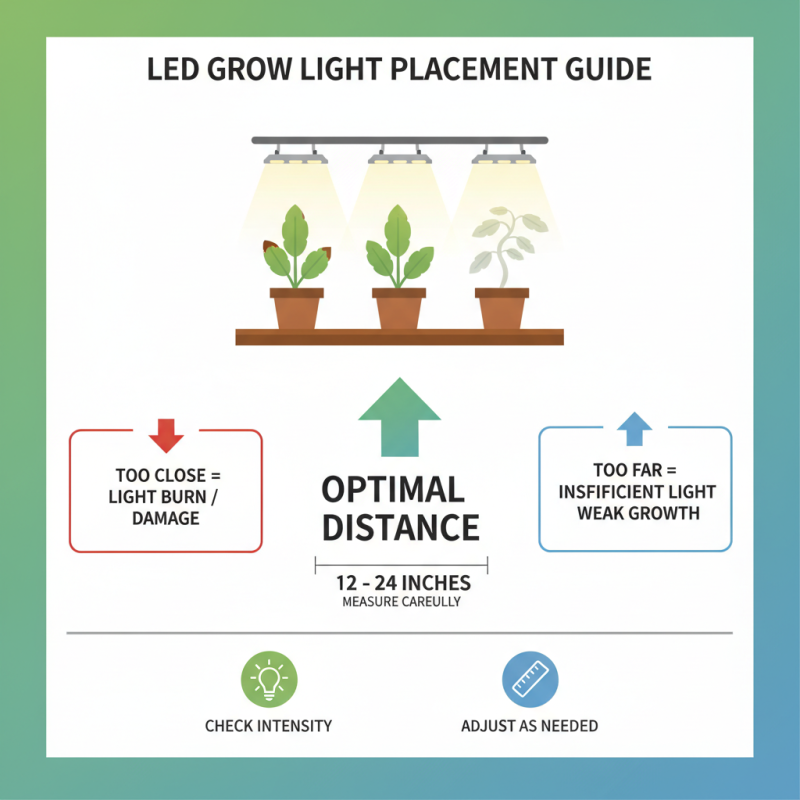
Setting up LED grow lights can be an exciting yet challenging task. Start by ensuring the right distance between the plants and the lights. Ideally, this distance should be around 12 to 24 inches, depending on the light intensity. Measure carefully. Too close can cause damage. Too far means insufficient light.
When using LED grow lights, consider the plant's growth stage. For seedling stages, lower light intensity is often adequate. However, flowering plants benefit from higher intensity. Adjust the settings according to these needs. Monitor your plants closely; they will show signs of stress if conditions are not ideal.
Reflect on the color spectrum of the lights as well. Blue light promotes vegetative growth, while red light encourages flowering. Experiment with combinations for optimal results. Track your growth process, noting successes and failures alike. Not everyone gets it right the first time. Learning from mistakes is essential in gardening.