Top 10 Tips for Choosing the Best Greenhouse Lights for Your Plants
In the world of horticulture, the choice of greenhouse lights can make a significant difference in the growth and health of your plants. Renowned greenhouse lighting expert Dr. Emily Thompson emphasizes this point, stating, "The right lighting can transform a simple greenhouse into a thriving ecosystem for your plants." As more enthusiasts and professionals turn to controlled environment agriculture, understanding the nuances of greenhouse lights has never been more crucial.
Selecting the appropriate greenhouse lights involves considering various factors, including plant types, growth stages, and energy efficiency. With so many options available, it can be overwhelming for both new and seasoned growers. This guide aims to simplify the decision-making process by highlighting the top 10 tips for choosing the best greenhouse lights tailored to your specific needs. By employing the right knowledge and strategies, you can ensure that your plants receive the optimal light spectrum, leading to healthier and more productive growth.
Understanding the Importance of Light Spectrum for Plant Growth
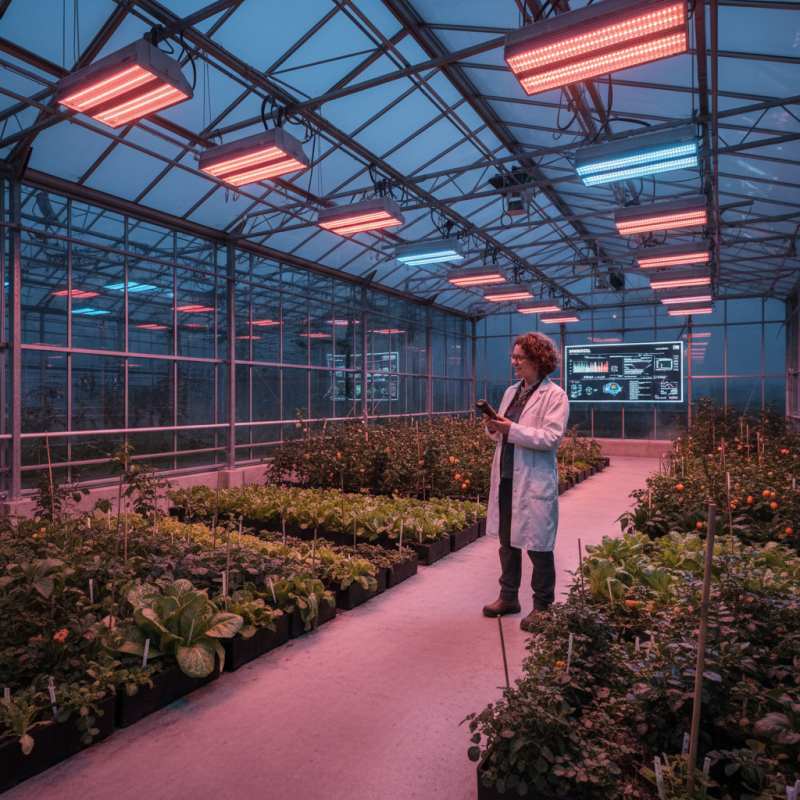
Understanding the importance of light spectrum for plant growth is crucial for maximizing the efficiency of greenhouse lighting. Different wavelengths of light play distinct roles in plant development; for instance, blue light (400-500 nm) is essential for vegetative growth, while red light (600-700 nm) promotes flowering and fruiting. According to research published by the American Society for Horticultural Science, plants exposed to a balanced spectrum of blue and red light can increase biomass by up to 30% compared to those grown under non-optimized lighting conditions. This highlights the pivotal role of tailored lighting in achieving robust plant health and productivity.
Furthermore, the light spectrum influences not only growth rates but also the overall quality of the plants produced. A report from the International Society for Horticultural Science reveals that specific combinations of red and blue light can enhance chlorophyll synthesis, leading to healthier plants with improved photosynthetic efficiency. Moreover, the introduction of far-red light (700-800 nm) has been found to trigger important plant responses, such as stem elongation and flowering time adjustments, further optimizing the cultivation process. Understanding and applying the principles of light spectrum in greenhouse lighting is therefore critical for growers aiming for optimal yields and quality in their plants.
Light Spectrum and Its Impact on Plant Growth
Evaluating Different Types of Greenhouse Lights: LEDs vs. HPS vs. CFLs
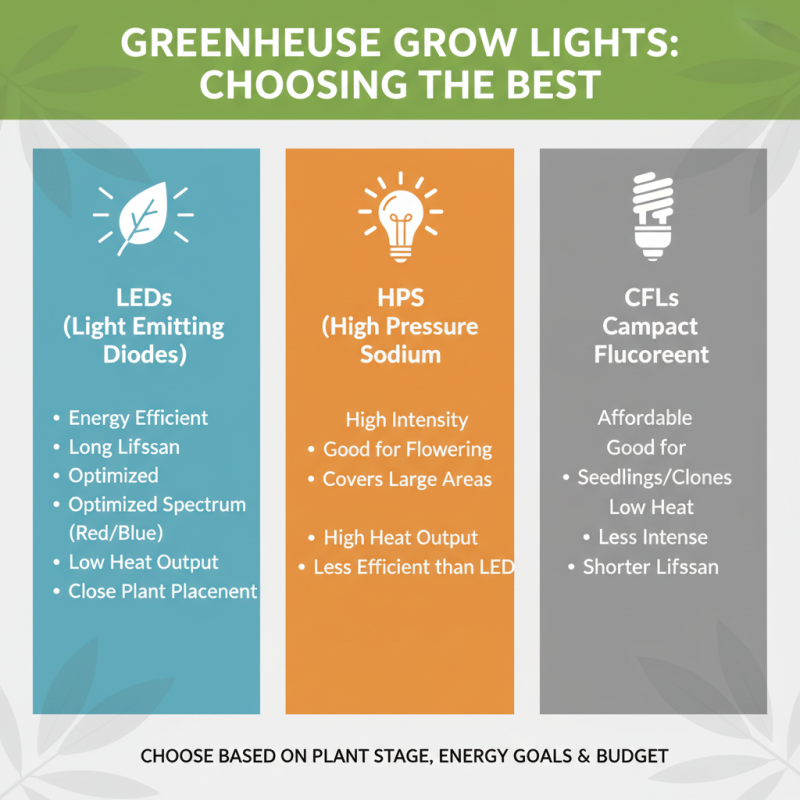
When selecting greenhouse lights, it's essential to consider the various types available, particularly LEDs, HPS, and CFLs, as each comes with its unique advantages and drawbacks. LEDs, or Light Emitting Diodes, are gaining popularity due to their energy efficiency and longevity. They emit specific wavelengths ideal for plant growth, minimizing waste and ensuring that plants receive the most beneficial light spectrum. Furthermore, LEDs produce less heat than traditional options, allowing for closer placement to plants without the risk of burning them.
On the other hand, High-Pressure Sodium (HPS) lights have been a mainstay in greenhouse lighting for many years. These lights are known for producing intense light that is effective for flowering stages of plant growth. However, they consume more electricity and generate significant heat, which necessitates additional cooling solutions. Compact Fluorescent Lamps (CFLs) offer a middle ground; while not as powerful as HPS, they are more energy-efficient and can be placed in various setups, making them suitable for smaller greenhouses or specific plant needs. When deciding on the best lighting for your greenhouse, consider the growth phases of your plants, the space available, and the energy consumption you're willing to manage.
Assessing Lumens and PAR: Key Metrics for Effective Plant Lighting
When selecting greenhouse lights for optimal plant growth, understanding lumens and Photosynthetically Active Radiation (PAR) is crucial. Lumens measure the total amount of visible light emitted by a source, indicating how bright a light appears to the human eye. However, this metric is not the most reliable for evaluating plant growth efficiency. According to a study published in the journal "HortScience", while lumens provide a baseline for brightness, they do not account for how much of that light is usable for photosynthesis, which primarily occurs in the wavelength range of 400 to 700 nanometers.
This is where PAR comes into play. PAR quantifies the amount of light that is useful for plants during the photosynthesis process, as not all light contributes equally to plant growth. Research from the University of Georgia highlights that an optimal PAR range for most plants typically falls between 300 to 800 μmol/m²/s. Additionally, studies reveal that the intensity and duration of PAR exposure directly influence growth outcomes. For instance, plants exposed to adequate PAR levels showed a 30% increase in photosynthetic efficiency compared to those with insufficient lighting. Therefore, while assessing greenhouse lights, focusing on PAR specifications rather than solely on lumens can lead to more informed decisions that enhance growth efficiency and yield.
Determining Wattage Needs Based on Greenhouse Size and Plant Types
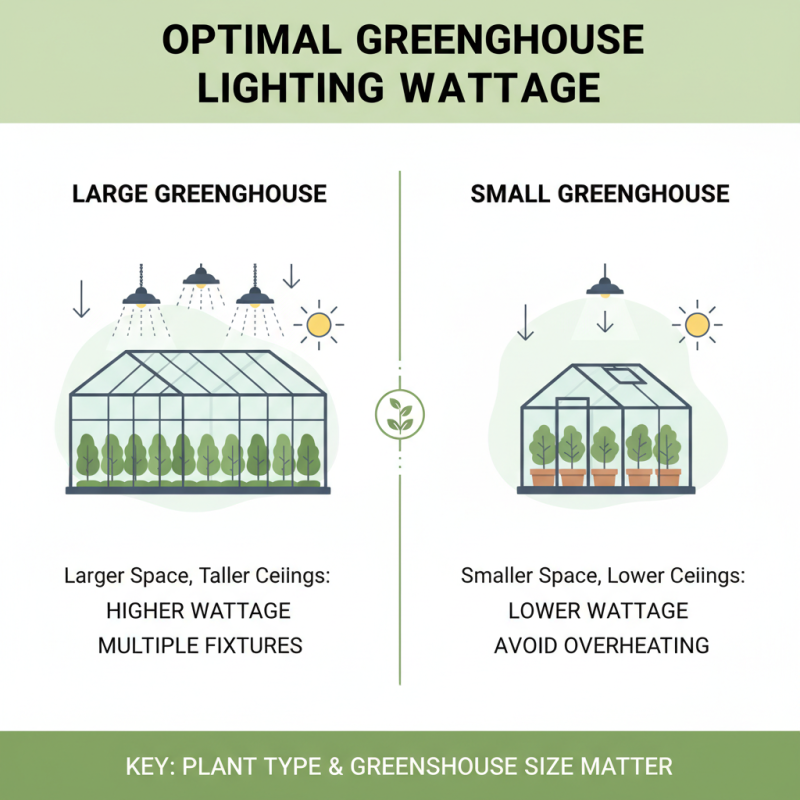
When selecting greenhouse lights, understanding the wattage needs is essential for ensuring optimal growth for your plants. The wattage requirements depend significantly on the size of your greenhouse and the types of plants you are cultivating. For instance, larger greenhouses with high ceilings may require higher wattage lights or multiple fixtures to evenly distribute light across the space. Conversely, smaller spaces may only need lower wattage options to avoid overheating and energy waste.
In addition to greenhouse size, different plant types have varying light intensity requirements. Leafy greens, for example, thrive with moderate light levels and may only require around 20-40 watts per square foot. On the other hand, flowering or fruiting plants, such as tomatoes or peppers, generally require higher light intensities, ranging from 40 to 70 watts per square foot. By carefully assessing both the size of your greenhouse and the specific needs of your plants, you can determine the right wattage that strikes a balance between energy efficiency and optimal plant growth.
Considering Energy Efficiency and Heat Output in Greenhouse Lighting Choices
When selecting greenhouse lights, it is crucial to prioritize energy efficiency and heat output to ensure optimal growth for your plants while minimizing operational costs. Energy-efficient lighting options, such as LED lights, not only reduce electricity consumption but also produce less heat compared to traditional lighting systems. This attribute is particularly beneficial in a greenhouse setting where temperature control is vital for plant health. Choosing lights that convert a higher percentage of energy into usable light, rather than heat, can help maintain consistent temperatures and promote better growth conditions.
In addition to energy efficiency, managing heat output is essential when deciding on greenhouse lighting. Excess heat can lead to temperature fluctuations, potentially harming sensitive plants and affecting their development. An ideal lighting system should provide adequate illumination without raising the greenhouse temperature excessively. Opting for lights with adjustable intensities can enhance flexibility, allowing you to tailor the light levels based on the specific needs of different plant species and growth stages. By finding a balance between energy consumption and heat generation, you can create a thriving environment for your plants while keeping energy costs manageable.
Top 10 Tips for Choosing the Best Greenhouse Lights for Your Plants
| Tip Number |
Tip Description |
Energy Efficiency Rating |
Heat Output |
| 1 |
Choose LED lights for optimal energy efficiency. |
90% |
Low |
| 2 |
Consider the wattage needs of your plants. |
N/A |
Medium |
| 3 |
Select full-spectrum lights for diverse growth stages. |
85% |
Medium |
| 4 |
Utilize timers to control light duration. |
N/A |
N/A |
| 5 |
Explore dimmable options for flexibility. |
80% |
Low |
| 6 |
Ensure lights cover the entire growing area. |
N/A |
N/A |
| 7 |
Consider the lifespan and warranty of the lights. |
N/A |
N/A |
| 8 |
Check for light intensity in lumens. |
N/A |
High |
| 9 |
Choose lights with low infrared radiation. |
N/A |
Low |
| 10 |
Plan for ease of installation and maintenance. |
N/A |
N/A |