How to Choose Freeze Dried Fruits for Healthy Snacking?
Choosing the right snacks can significantly impact our health. Freeze Dried Fruits have gained popularity in recent years for their convenience and nutritional benefits. According to a report by the USDA, freeze drying preserves about 97% of vitamins and minerals. This makes them a wise option for healthy snacking.
When selecting freeze dried fruits, look for those without added sugars or preservatives. Many brands boast of vibrant colors, but these can sometimes be misleading. A study from the Journal of Food Science highlights that natural colors are often a sign of quality. Additionally, consider sourcing fruits that are organic. Organic freeze dried fruits may offer better nutrient retention.
However, it is essential to be cautious. Not all freeze dried fruits are created equal. Some brands over-process their products, leading to nutrient loss. Always read labels and check for certifications. Remember, while freeze dried fruits are nutritious, they should complement a balanced diet. A mindful approach to snacking can make a difference.
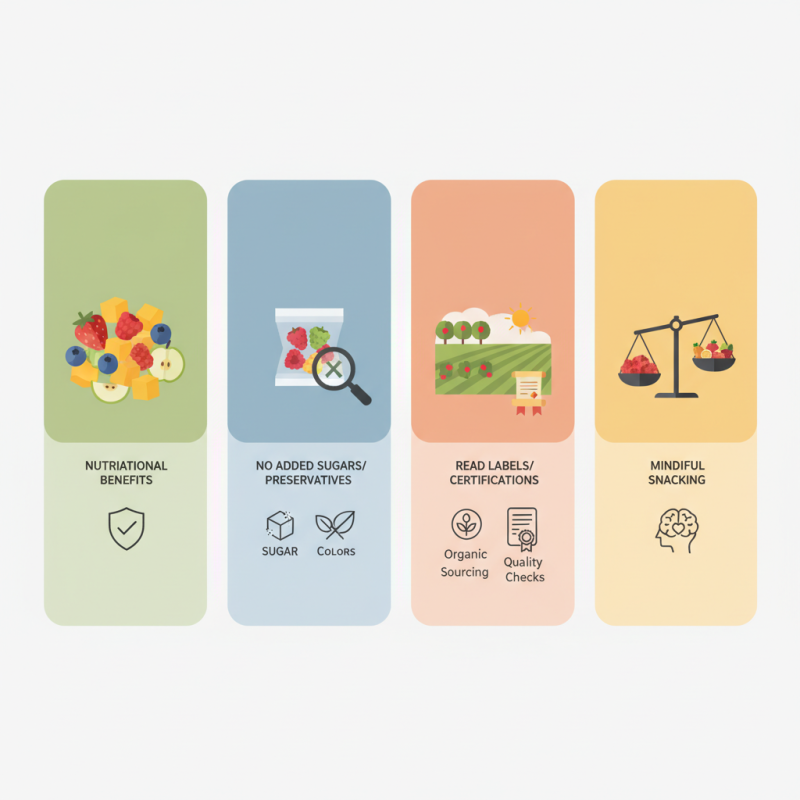
Understanding Freeze-Dried Fruits and Their Nutritional Benefits
Freeze-dried fruits are a popular choice for healthy snacking. They retain most of their nutrients during the freeze-drying process. This method removes water without cooking, preserving vitamins and minerals effectively. You can enjoy a burst of flavor without excess sugar or preservatives.
When choosing freeze-dried fruits, look for products with no added sugars. Check the ingredient list carefully. Simplicity is key. Whole fruits provide essential fibers and antioxidants. However, not all freeze-dried options are the same. Some may have added ingredients that compromise their health benefits.
Tips: Always store freeze-dried fruits in a cool, dry place. This helps maintain their quality. When snacking, mix different fruits for variety. Fruits like strawberries, bananas, and apples work well together. They create an appealing and nutritious snack. Enjoying freeze-dried fruits can sometimes lead to overeating, so be mindful. It’s easy to snack on them mindlessly, especially when they’re delicious.
How to Choose Freeze Dried Fruits for Healthy Snacking?
| Fruit Type | Nutritional Benefits | Calories per 100g | Fiber (g) | Sugars (g) |
| Strawberries | High in vitamin C and antioxidants | 325 | 13 | 21 |
| Bananas | Rich in potassium and vitamin B6 | 346 | 7.9 | 73 |
| Apples | Good source of fiber and vitamin C | 380 | 14 | 65 |
| Mangoes | High in vitamin A and C, good for immunity | 350 | 16 | 58 |
| Pineapples | Contains bromelain, good for digestion | 347 | 9.5 | 54 |
Evaluating Quality: What to Look for in Freeze-Dried Fruits
When choosing freeze-dried fruits, quality is key. Look for vibrant colors. Natural hues indicate freshness. Dull colors might suggest over-processing. A brighter appearance often means better nutrition. Check the packaging for any signs of damage. Crushed or broken pieces could mean older stock.
Another important aspect is the ingredient list. Ideally, it should only include fruit. No added sugars or preservatives are desirable. Sometimes, manufacturers add extra ingredients to enhance flavor. This can mask the natural taste. Taste can vary widely between brands, making it hard to know what's best.
Texture matters too. Quality freeze-dried fruits should be crispy and lightweight. They should not be chewy or sticky. Consider sampling different brands. Your palate might prefer one over another. Price can also be a concern. More expensive options may not always mean better quality. Reflect on your choices. Are you prioritizing taste, texture, or price? Finding the right balance is essential for healthy snacking.
Comparing Different Types of Freeze-Dried Fruits for Snacking
When choosing freeze-dried fruits for healthy snacking, it’s crucial to compare the available options. Freeze-dried fruits retain most of their nutrients. According to industry reports, they can maintain up to 90% of their original vitamins. Strawberries and blueberries are popular choices. They are not only delicious but also packed with antioxidants.
Consider the texture and flavor. Some freeze-dried fruits have crunchy textures, while others are chewy. Apples and bananas tend to have a milder taste, while peaches and cherries offer more sweetness. The variety can enhance your snacking experience. A diverse mix can prevent boredom and increase nutrient intake.
**Tip:** Always check the ingredient list. Some products might contain added sugars or preservatives. These can detract from the health benefits. Look for options with no added ingredients.
Think about portion sizes as well. While freeze-dried fruits are healthy, they are calorie-dense. A serving size might be smaller than fresh fruits. Take the time to weigh your options. Balancing your snacks with a variety of nutrients can improve overall health.
Tips for Incorporating Freeze-Dried Fruits into Your Diet
Incorporating freeze-dried fruits into your diet can be fun and rewarding. These fruits maintain most of their nutrients, making them a convenient choice. Snack on them directly for a quick boost. You might also sprinkle them on yogurt or oatmeal. The crunch adds texture, and the vibrant colors make meals visually appealing.
Another idea is to blend freeze-dried fruits into smoothies. Doing so enhances flavor and adds natural sweetness. You can experiment with different types of fruits. Try mixing strawberries with bananas or adding peaches to your berry blend. The possibilities are endless, but remember not to overdo it; moderation is key.
Think about using freeze-dried fruits in baking as well. Add them to muffins or pancakes for a flavorful twist. Just remember, the added sugars in your recipes can offset the benefits. Reflect on this and adjust your ingredient ratios to suit your health goals. Embrace the creativity that freeze-dried fruits offer while being mindful of balancing flavors and nutrition.
Storage and Shelf Life of Freeze-Dried Fruits for Optimal Freshness
When selecting freeze-dried fruits, storage and shelf life play a crucial role. These snacks can last for a long time, but optimal freshness depends on how you store them. A cool, dark place is ideal. Light and heat can degrade quality quickly. Storing them in an airtight container helps maintain their crispiness and flavor.
The shelf life of freeze-dried fruits typically ranges from 5 to 25 years, depending on packaging and storage conditions. Moisture is the enemy; even a small amount can ruin them. It’s frustrating when you open a bag only to find them stale or chewy. Checking for any signs of moisture or discoloration is essential before consumption.
Make sure to review the packaging. Some fruits might not retain flavor as well as others over time. The texture changes can also affect the snack experience. It’s worth considering that not all varieties work equally well in freeze-dried form. If you find a favorite, keep notes on its storage conditions. Experiment with different options, and you may discover surprising favorites.