How to Choose the Best Commercial Greenhouse Kits for Your Farming Needs
When it comes to modern farming, the choice of the right infrastructure can significantly influence productivity and sustainability. Commercial greenhouse kits have emerged as a vital solution for farmers looking to optimize their growing environments. These kits are designed to provide a controlled climate, enabling crops to flourish year-round and protecting them from adverse weather conditions. This adaptability is particularly essential in today's rapidly changing climate, where making the most of every growing season is paramount.
Selecting the best commercial greenhouse kits requires a thorough understanding of your specific farming needs. Factors such as the types of crops you intend to grow, local climate conditions, and your budget play critical roles in this decision-making process. Furthermore, the structure of the greenhouse, including size, materials, and design, can greatly impact both the initial investment and long-term operational efficiency.
In this guide, we will explore essential aspects to consider when choosing commercial greenhouse kits, ensuring that you make an informed decision that supports your agricultural goals. Whether you are a seasoned farmer or just starting out, understanding these key factors will enable you to create an effective growing environment tailored to your unique requirements.
Understanding Your Farming Objectives and Goals
Choosing the right commercial greenhouse kit begins with a clear understanding of your farming objectives and goals. Whether you aim to cultivate seasonal crops, a diverse array of vegetables, or even specialty flowers, your greenhouse needs will vary significantly. A survey conducted by the American Society for Horticultural Science noted that over 30% of growers reported increased yields and reduced pest pressures through the use of controlled environment agriculture, which highlights the importance of aligning your greenhouse kit with your farming aspirations.
When assessing your needs, consider factors such as climate control, crop type, and scalability. Greenhouses equipped with advanced climate control systems can regulate temperature and humidity effectively, which is crucial for optimizing growth conditions. According to a report by Grand View Research, the global greenhouse market is projected to reach USD 43.5 billion by 2027, driven by the increasing demand for local produce and sustainable farming practices. This growth underscores the necessity for growers to invest time in selecting kits that will support long-term goals.
**Tips:** Prioritize greenhouse kits with versatile design options to ensure adaptability to future farming objectives. Additionally, consult with agricultural extension services for guidance tailored to your local climate and soil conditions, which can enhance your decision-making process. Ultimately, focusing on your planting goals from the outset will set the foundation for a productive and profitable greenhouse operation.
Evaluating Different Types of Commercial Greenhouse Kits
When evaluating different types of commercial greenhouse kits, it's important to consider several key features that align with your specific farming needs. First and foremost, the structure and material of the greenhouse play a crucial role in determining its durability and effectiveness. Options range from traditional glass to polycarbonate or polyethylene films. Glass greenhouses offer excellent light transmission but may require more maintenance and can be heavier, while polycarbonate panels provide greater insulation and impact resistance, making them a popular choice for various climates.
Additionally, the size and layout of the greenhouse are essential factors to consider. Commercial kits come in various dimensions, so it’s important to select one that fits the available space and allows for efficient crop management. Features such as ventilation, energy efficiency, and integrated irrigation systems can enhance productivity and optimize growing conditions. Assessing these characteristics in different greenhouse kits will ensure you choose the most suitable option that aligns with your operational goals and environmental conditions.
Key Features to Consider in Greenhouse Kits
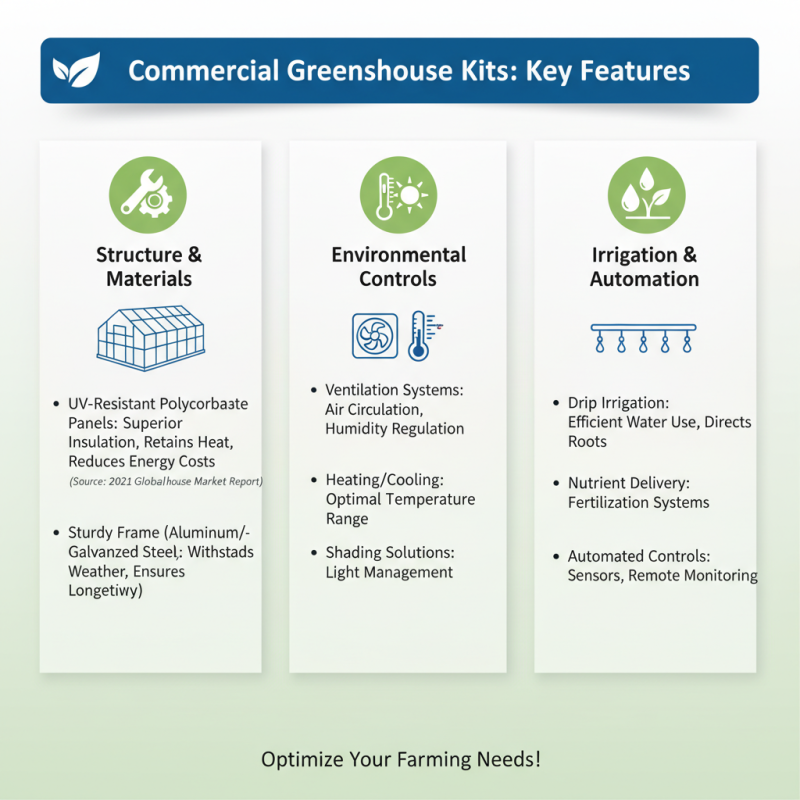
When selecting the best commercial greenhouse kits for your farming needs, several key features should be considered to ensure optimal growth conditions for your plants. First and foremost, the structure and materials used in greenhouse kits play a critical role in durability and insulation. According to the 2021 Global Greenhouse Market report, strong, UV-resistant polycarbonate panels provide superior insulation, retaining heat during colder months and reducing energy costs. Additionally, a sturdy frame made from aluminum or galvanized steel can withstand harsh weather conditions, ensuring longevity and safety for your investment.
Ventilation is another crucial aspect that cannot be overlooked. Proper airflow regulates temperature and humidity, which are vital for healthy plant growth. Studies indicate that inadequate ventilation can lead to a 20% decrease in crop yields. Look for kits that not only include adjustable vents but also options for automated ventilation systems to enhance efficiency. Furthermore, the scalability of a greenhouse is essential for growing businesses. A modular design allows for future expansion, accommodating increasing production needs while optimizing space. As the demand for localized agricultural production rises, investing in a greenhouse that offers flexibility can prove beneficial in sustaining your farm's growth trajectory.
Assessing Budget and Cost-Effectiveness for Your Needs
When selecting the best commercial greenhouse kits, evaluating your budget and ensuring cost-effectiveness is crucial. According to a report by the National Agricultural Statistics Service (NASS), the average investment for greenhouse structures can range from $3,000 to over $100,000, depending on size and complexity. This variability highlights the importance of closely examining your specific farming needs and financial capabilities before making a decision. A well-planned budget takes into account not just the initial costs of the greenhouse but also operational expenses, including heating, ventilation, and irrigation systems.
Furthermore, the cost-effectiveness of a greenhouse kit can be enhanced by considering long-term benefits. Research from the American Society for Horticultural Science indicates that greenhouses can increase crop yields by 30-50%, depending on the crop and management practices employed. Therefore, while the initial outlay may seem significant, it is essential to analyze return on investment (ROI) over time. By focusing on energy-efficient designs and materials, farmers can further reduce operational costs, making the initial expenditure more justifiable. It's essential to conduct thorough research and seek professional advice to determine the right balance between upfront costs and potential earnings.
Maintenance and Durability: Long-Term Considerations for Greenhouses
When selecting a greenhouse kit, considering maintenance and durability is crucial for long-term success. Greenhouses face various environmental factors, such as rain, snow, wind, and sun exposure, all of which can impact their lifespan and the effort needed to maintain them. Opting for materials that are sturdy and resilient, such as galvanized steel frames and UV-resistant polycarbonate panels, can significantly enhance the durability of your greenhouse. Regular inspections for wear and tear can also help to catch any potential issues before they escalate into costly repairs or replacements.
Tips for maintaining your greenhouse include using protective coverings during extreme weather events and ensuring proper ventilation to prevent moisture buildup, which can lead to mold or mildew. Routine cleaning of glass or plastic surfaces is essential to maximize sunlight penetration and overall health of your plants. Additionally, keeping a maintenance log can help track the condition of your greenhouse and identify any recurring issues, guiding you toward better long-term solutions.
Investing in a high-quality greenhouse kit means you'll be equipped to cultivate your plants efficiently over time. Consider features like easy-to-replace components and warranty options, which can contribute to less hassle and more productivity. Always remember that a well-maintained greenhouse not only enhances crop yield but also extends its usability for future growing seasons.
How to Choose the Best Commercial Greenhouse Kits for Your Farming Needs - Maintenance and Durability: Long-Term Considerations for Greenhouses
| Dimension |
Description |
Considerations |
Maintenance Frequency |
| Material Quality |
Durability of frame and covering materials |
Steel or aluminum frames recommended |
Yearly inspection |
| Ventilation |
Adequate airflow for plants |
Adjustable vents preferable |
Seasonally |
| Ease of Assembly |
Time and difficulty to set up |
Pre-drilled holes and clear instructions |
Initial setup |
| Temperature Control |
Systems in place to maintain optimal temperature |
Heaters and cooling systems |
Monthly checks |
| Accessibility |
Ease of entering and working within the greenhouse |
Wide doors and walkways |
As needed |