Why Choose Commercial Greenhouse Kits for Your Growing Needs?
In the ever-evolving world of agriculture, the importance of efficient and sustainable growing solutions cannot be overstated. One such solution that has gained significant attention in recent years is the use of commercial greenhouse kits. These kits offer a versatile and controlled environment for crops, maximizing growth potential while minimizing external risks. Renowned horticulturist Dr. Jane Thompson emphasizes the potential of these systems, stating, "Commercial greenhouse kits empower growers to cultivate high-quality produce regardless of seasonal limitations."
As the demand for organic and locally sourced food increases, commercial greenhouse kits present an accessible pathway for both novice and seasoned farmers. They facilitate year-round cultivation, providing an ideal environment that shields plants from adverse weather conditions and pests. Furthermore, these kits come in various designs and sizes, catering to a wide range of agricultural needs. With the ability to optimize space and resource usage, growers can focus on producing healthy crops while embracing sustainable practices.
In conclusion, the growing popularity of commercial greenhouse kits reflects a shift towards innovative agricultural strategies. By leveraging these systems, farmers can enhance their productivity and contribute to a more sustainable food system, ultimately benefiting both their business and the wider community.
Benefits of Using Commercial Greenhouse Kits for Growing Plants
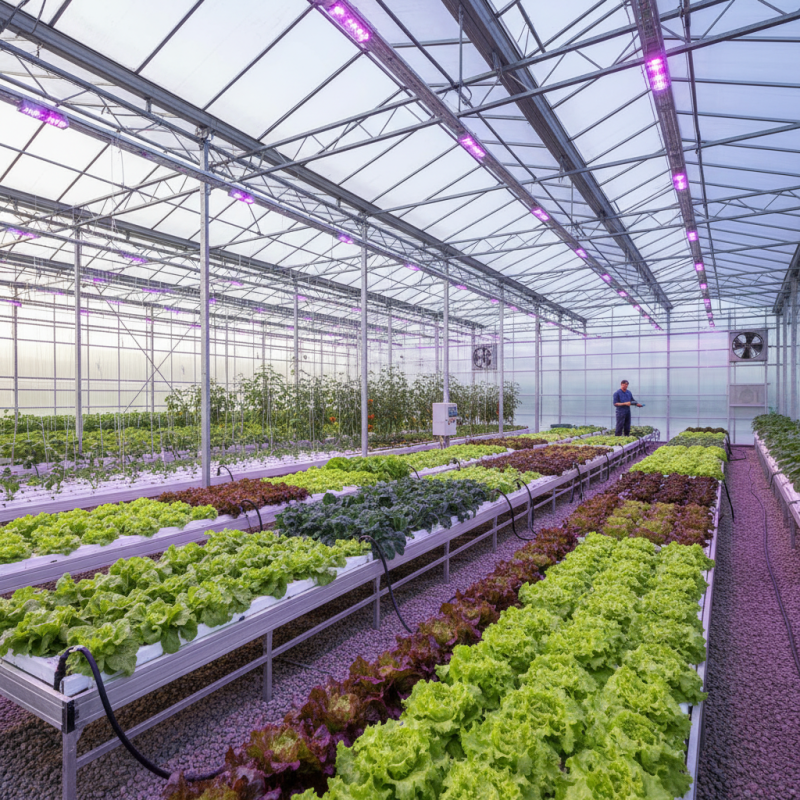
Commercial greenhouse kits offer a myriad of advantages that cater to various growing needs, significantly enhancing plant production and management efficiency. According to a report by the U.S. Department of Agriculture (USDA), greenhouse production can lead to a 30% increase in yield compared to traditional farming methods. This boost is largely due to the controlled environment that greenhouses provide, allowing growers to optimize temperature, humidity, and light exposure. This results in a longer growing season, as plants are shielded from adverse weather conditions, enabling year-round cultivation.
Moreover, commercial greenhouse kits are designed for scalability and ease of use. The National Agricultural Statistics Service (NASS) indicates that greenhouse and nursery production in the United States reached a value of $5 billion in 2021, showcasing the sector's growth potential. These kits often come with pre-made structures and comprehensive instructions, making them accessible for both novice and experienced growers. Furthermore, by implementing technologies such as hydroponics and automated climate control systems, these greenhouses can enhance resource efficiency, leading to reduced water usage by up to 90% compared to conventional farming methods. Consequently, investing in commercial greenhouse kits not only contributes to higher yields but also promotes sustainable agricultural practices.
Benefits of Using Commercial Greenhouse Kits for Growing Plants
Types of Greenhouse Kits and Their Suitability for Different Crops
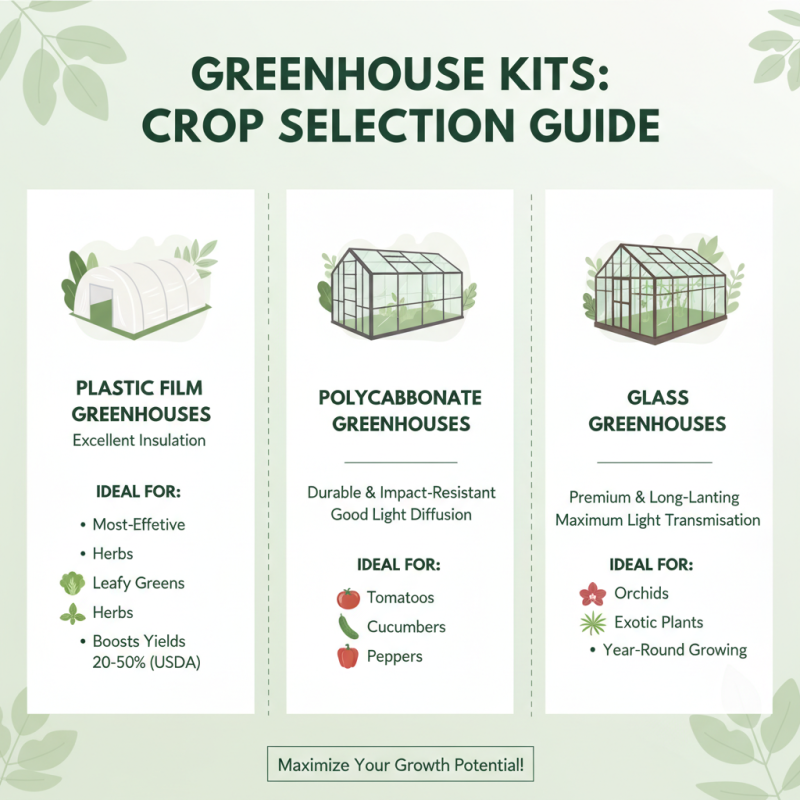
When selecting a greenhouse kit, understanding the suitability of different types for various crops is essential for maximizing growth potential. Commercial greenhouse kits generally fall into several categories, including plastic film, polycarbonate, and glass structures. Plastic film greenhouses, often the most cost-effective, offer excellent insulation and are well-suited for fast-growing crops such as leafy greens and herbs. According to the USDA, these structures can boost crop yields by 20-50% compared to traditional outdoor growing methods.
Conversely, polycarbonate greenhouses provide better durability and are better suited for more robust crops, like tomatoes and peppers, which thrive in a controlled environment. A 2023 report from the National Agricultural Statistics Service indicates that growers utilizing polycarbonate structures reported higher quality fruits and vegetables due to improved climate control and protection from pests, leading to a 30% increase in marketability.
Tip: When choosing a greenhouse kit, consider the specific crop you wish to grow and the climate conditions in your area, as this can significantly impact your success. Additionally, evaluate the ventilation options available in the kit; good airflow is crucial for preventing mold and ensuring optimal growth conditions.
Another important consideration is the space needed for different crops. For larger varieties like cucumbers or squash, a high-roof model allows for vertical growth, maximizing your growing area. Utilizing vertical gardening techniques can further enhance yield, with studies indicating that such methods can increase space efficiency by over 50%.
Key Features to Consider When Selecting a Greenhouse Kit
When selecting a commercial greenhouse kit, several key features should be taken into account to ensure it meets your growing needs effectively. First and foremost, consider the size of the greenhouse. The dimensions should be appropriate for the available space and the type of plants you intend to cultivate. Larger structures may provide greater flexibility and accommodate a wider variety of plant species, while smaller kits might be suited for those with limited space or specific growing objectives.
Another important feature to evaluate is the material used in the greenhouse's construction. Materials such as polycarbonate, glass, or polyethylene film each offer different advantages in terms of insulation, light transmission, and durability. Polycarbonate, for instance, is an excellent insulator and can withstand harsh weather conditions. Additionally, ventilation options are crucial; ensure the kit includes adequate vents or fans to maintain the optimal temperature and humidity levels for plant health. Renewable energy options like solar panels can also be considered for eco-conscious growers looking to minimize their environmental impact.
Cost-Effectiveness of Commercial Greenhouse Kits for Small Businesses
Commercial greenhouse kits present a compelling cost-effective solution for small businesses looking to optimize their growing operations. According to a report by the Agricultural Marketing Resource Center, the cost of establishing a traditional greenhouse can range from $25,000 to $100,000, depending on various factors like size and materials. In contrast, commercial greenhouse kits can be acquired at a significantly lower initial investment, often between $5,000 and $20,000. This reduction in upfront costs allows small business owners to allocate resources to other vital areas, such as marketing and product development.
Additionally, greenhouse kits are often designed for efficient and quick assembly, which further decreases labor costs associated with setup. A study conducted by the American Society for Horticultural Science revealed that businesses using modular greenhouse systems experienced a 35% reduction in labor costs compared to those constructing traditional greenhouses from scratch. Moreover, the ability to quickly scale up operations with these kits also allows small businesses to respond rapidly to market demands without incurring the risks typically associated with larger investments. Consequently, commercial greenhouse kits not only enhance operational efficiency but also provide small businesses with the agility needed to thrive in an increasingly competitive marketplace.
Maintenance and Durability of Greenhouse Kits for Long-Term Use
When considering the long-term benefits of commercial greenhouse kits, maintenance and durability are paramount. According to a report by the National Greenhouse Manufacturers Association, the lifespan of a well-constructed greenhouse can exceed 20 years, significantly reducing the overall cost of investment for growers. These kits are designed with durable materials such as high-grade aluminum and polycarbonate panels, which provide both structural integrity and climate control. Such durability ensures that the greenhouse can withstand harsh weather conditions, from heavy snowfall to intense sunlight, while minimizing the need for frequent repairs.
Moreover, the ease of maintenance associated with commercial greenhouse kits allows for seamless integration into any growing operation. A study published in the Journal of Agricultural Engineering Research indicates that standardized greenhouse kits require 30% less maintenance time compared to custom-built alternatives. This efficiency not only saves growers time but also enables them to focus on optimizing their cultivation processes. Additionally, many greenhouse kits are equipped with features such as automated ventilation and irrigation systems, which further reduce the complexity of upkeep, allowing for more sustainable agricultural practices. Through these aspects of maintenance and durability, commercial greenhouse kits present a compelling choice for both novice and experienced growers looking to enhance their productivity in a sustainable manner.