How to Choose the Best Greenhouse Grow Lights for Your Plants Success
In the realm of indoor horticulture, the selection of appropriate greenhouse grow lights is paramount to ensuring the thriving success of plants. A report from MarketsandMarkets highlights that the global grow lights market is projected to reach $4.09 billion by 2023, driven by the increasing demand for sustainable agricultural practices and the growing trend of urban gardening. As various types of greenhouse grow lights—such as LED, fluorescent, and HID—each offer unique advantages, understanding their functionalities and the specific needs of different plants becomes essential for maximizing yield.
Moreover, according to a study by the American Society for Horticultural Science, proper lighting can enhance the photosynthetic efficiency of crops, leading to increased growth rates and improved quality. The right greenhouse grow lights can not only extend the growing season but also help mitigate issues associated with inadequate natural light, especially in regions with long winters. Therefore, selecting the best greenhouse grow lights tailored to the unique conditions of your growing environment can significantly influence the productivity and health of your plants, making it a critical consideration for both amateur and professional horticulturists alike.
Understanding the Light Spectrum and Its Importance for Plant Growth
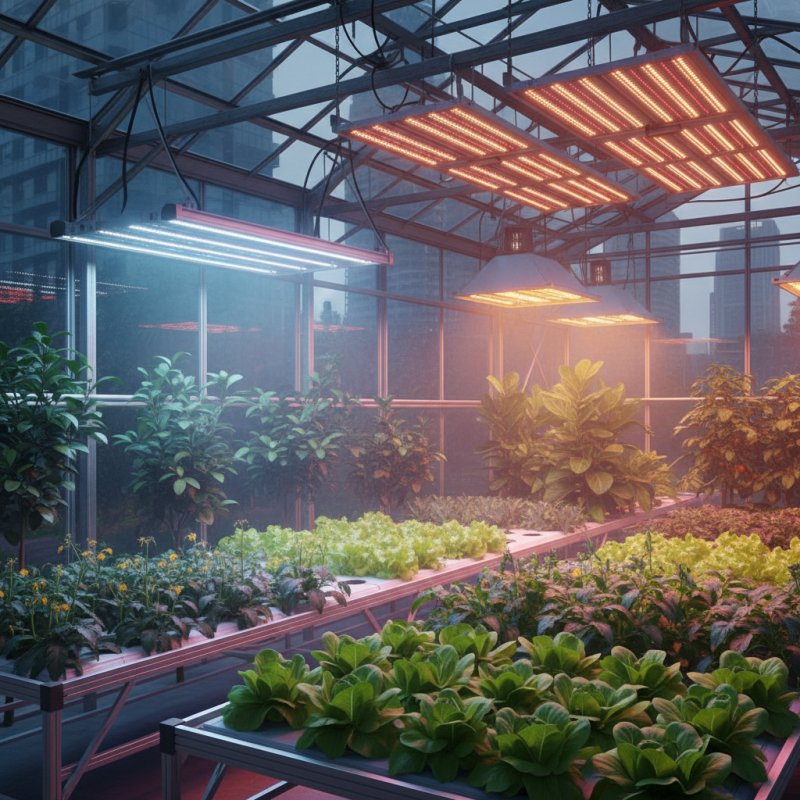
When selecting the best greenhouse grow lights, understanding the light spectrum is crucial for the success of your plants. Plants utilize various light wavelengths for different physiological processes, notably photosynthesis. The light spectrum is divided into several ranges, primarily including ultraviolet (UV), visible light, and infrared (IR). Each of these ranges serves its unique purpose; for instance, blue light (400-500 nm) is essential for vegetative growth, while red light (600-700 nm) promotes flowering and fruiting. Recognizing how these wavelengths benefit your plants will enable you to choose the right lighting for their specific needs.
Tips for selecting grow lights include considering the growth phase of your plants and the type of crops you are cultivating. If you are primarily growing leafy greens, blue light should dominate your setup. Conversely, fruiting plants require a higher ratio of red light to thrive. Additionally, assess the intensity and duration of light your plants will receive to mimic their natural environment. Investing in full-spectrum lights that provide a balanced range can also ensure your plants receive the necessary wavelengths throughout their growth stages.
Moreover, consider the distance and positioning of your grow lights to prevent any potential heat stress while ensuring adequate light penetration. A well-structured lighting plan tailored to your plants' needs can dramatically enhance growth, yield, and overall plant health. By prioritizing the light spectrum's significance and thoughtfully planning your light source, you set the foundation for a successful greenhouse environment.
Types of Grow Lights: LED, HPS, and CFL - Pros and Cons
When choosing grow lights for your greenhouse, understanding the different types available is crucial to ensuring the success of your plants. The three most common types are LED, HPS (High-Pressure Sodium), and CFL (Compact Fluorescent Lamps), each with their unique advantages and disadvantages.
LED grow lights are becoming increasingly popular due to their energy efficiency and long lifespan. They emit a full spectrum of light, which can be tailored to the specific needs of your plants. However, they can be more expensive upfront compared to other options. HPS lights are well-known for their high intensity and ability to promote flowering and fruiting in plants. Despite their efficiency, they generate a lot of heat and require proper ventilation, which can complicate their use in a greenhouse setting. CFLs are a budget-friendly option that works well for smaller setups and seedlings. While they are less powerful than LED or HPS, they consume less energy and can be placed closer to plants without the risk of burning them.
Tips for choosing the right type of grow light: First, consider the size of your greenhouse and the specific growth stages of your plants. Use LED lights for efficient energy use over larger areas, while CFLs may be ideal for beginners or smaller spaces. Secondly, think about the heat output; if your greenhouse is prone to overheating, LEDs could be the better choice due to their lower heat emission. Lastly, always check the light spectrum provided by the grow lights to ensure they meet the needs of your plants throughout their growth cycle.
Comparison of Grow Light Types
This chart illustrates the energy efficiency of different types of grow lights measured in watts per lumen. As shown, LED lights are the most energy-efficient option, followed by HPS and CFL lights. This information can help you choose the right grow lights for successful plant growth.
Optimal Light Intensity: Measuring PPFD for Different Plants
When selecting the best greenhouse grow lights, understanding light intensity is crucial for the success of your plants. Measuring PPFD (Photosynthetic Photon Flux Density) can help gardeners determine the optimal light levels for various plant types. Research indicates that most flowering and fruiting plants thrive under a PPFD of 400-800 μmol/m²/s, while leafy greens often require a lower range of 200-400 μmol/m²/s. This variability highlights the importance of tailoring light intensity according to the specific needs of your plants.
Tips for measuring and adjusting PPFD include using a reliable quantum sensor to obtain accurate readings. Aim to position your grow lights at the appropriate distance from the plants to achieve desired intensity levels; typically, this distance can be anywhere from 12 to 36 inches, depending on the light source's power. Additionally, consider the natural light conditions your plants receive to create a balanced lighting schedule. For instance, many growers implement a photoperiod of 14-18 hours of light per day during growth stages, reducing it to 10-12 hours for flowering.
Another essential aspect is to monitor plant responses to different light intensities actively. Signs of light stress include leaf discoloration and wilting, indicating that adjustments may be necessary. Conversely, healthy, vibrant foliage usually signals that you are providing the right amount of light. Regularly recalibrating and fine-tuning your lighting setup can lead to healthier plants and increased yields in your greenhouse garden.
Photoperiod: How Light Duration Affects Plant Development
The photoperiod, or the duration of light exposure a plant receives, plays a crucial role in its overall development. Plants have evolved to respond to changes in light duration, which influences their growth patterns, flowering, and fruiting cycles. For example, many species require a specific number of hours of light to trigger flowering, a phenomenon known as photoperiodism. Understanding a plant's light preferences—whether it is a short-day, long-day, or day-neutral plant—can help growers determine the optimal light duration needed for successful agricultural practices.
In indoor gardening or greenhouse settings, managing the photoperiod through the use of grow lights can significantly enhance plant growth. By providing the right amount of light at the appropriate wavelengths, growers can simulate natural sunlight, thus optimizing the conditions for photosynthesis. This manipulation allows for year-round growth and can lead to increased yields and healthier plants. Additionally, adjusting light duration can help in timing specific growth stages, ensuring that plants flower or produce fruit at the desired times. Ultimately, understanding and controlling photoperiod length is essential for maximizing the potential of any gardening endeavor.
How to Choose the Best Greenhouse Grow Lights for Your Plants Success - Photoperiod: How Light Duration Affects Plant Development
| Plant Type |
Optimal Light Duration (Hours) |
Light Spectrum Preference |
Growth Phase |
| Tomato |
14-16 |
Red/Blue |
Vegetative & Flowering |
| Lettuce |
12-14 |
Blue/Green |
Vegetative |
| Cucumbers |
14-16 |
Red/Blue |
Vegetative & Fruiting |
| Peppers |
12-16 |
Red/Blue |
Vegetative & Fruiting |
| Herbs (Basil, Mint) |
10-14 |
Full Spectrum |
Vegetative |
| Strawberries |
12-16 |
Red/Blue |
Vegetative & Fruiting |
Energy Efficiency and Cost Considerations for Grow Light Options
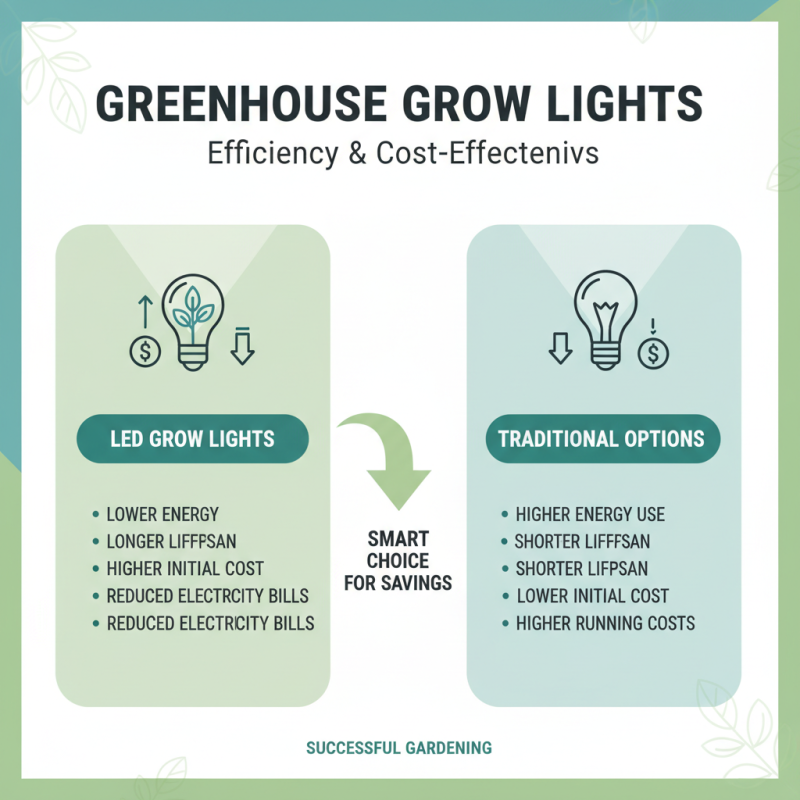
When choosing grow lights for your greenhouse, energy efficiency and cost considerations play a crucial role in ensuring a successful gardening experience. LED grow lights, for instance, have gained popularity due to their lower energy consumption and longer lifespan compared to traditional options. While they might have a higher initial purchase price, the reduced electricity bills over time make them a cost-effective choice for many growers.
Additionally, it's essential to consider the wattage and light spectrum when selecting grow lights. Lights that emit specific wavelengths of light needed for photosynthesis can enhance plant growth and minimize wasted energy. Look for energy-efficient options that provide a full spectrum of light tailored for the type of plants you are cultivating, as this can lead to better growth rates and healthier plants overall.
**Tips:** Always calculate the total wattage needed based on the area of your growing space to avoid energy waste. Use timers to regulate light cycles, ensuring your plants receive optimal light exposure without unnecessary energy usage. Regularly monitor your energy bills and adjust your lighting schedule or intensity as needed to maximize efficiency.